
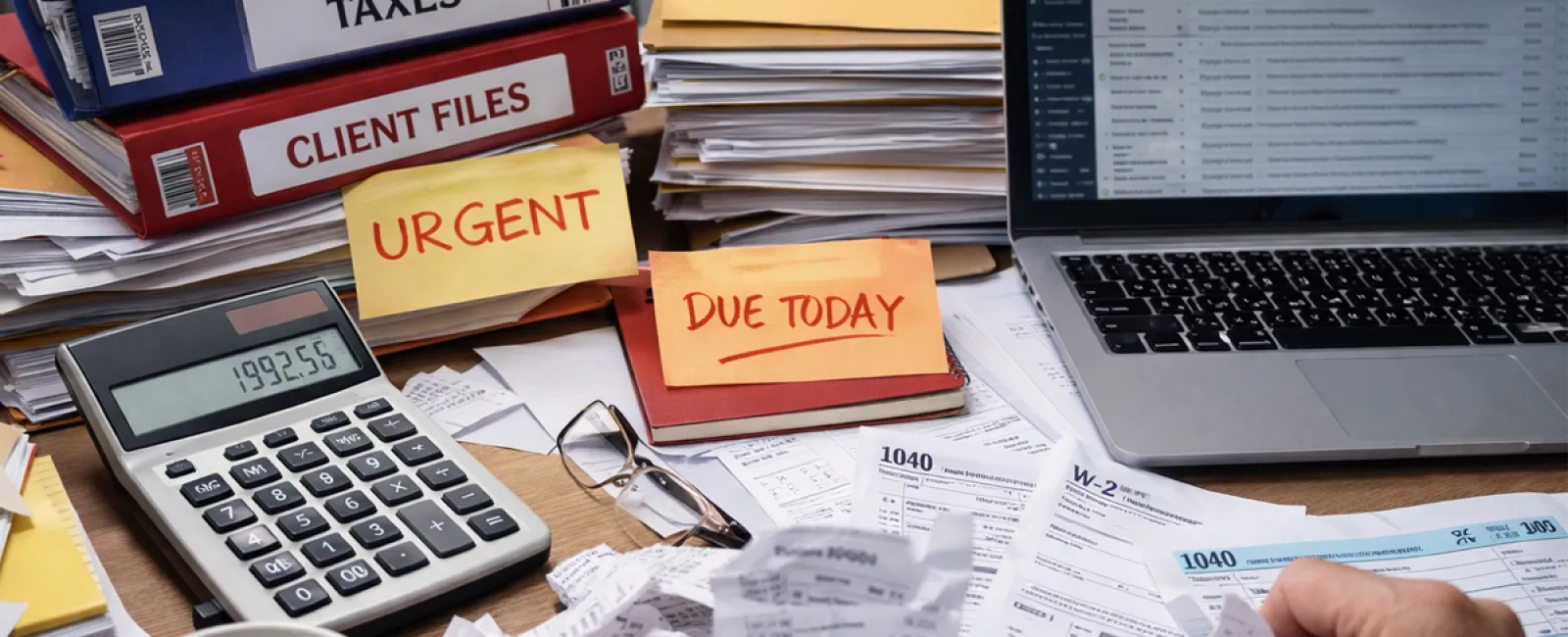
March has arrived.
Your accountant is overwhelmed. Your bookkeeper is rushing to keep pace. Deadlines loom large. Emails flood in faster than anyone can manage.
Everyone is heads-down, battling through the busiest time of the year.
This scenario feels all too familiar.
But hackers are well aware of this hustle.
Security experts consistently report a dramatic surge in phishing attacks during tax season, with March seeing nearly a 28% rise in tax-related scam emails compared to other months. These deceptive emails aren't flashy; they mimic everyday business communications, striking when teams are busiest.
This isn't accidental.
It's tactical timing.
Here's what to expect and four straightforward strategies to protect your company from becoming an easy target.
The Pressured Supply Chain
What many overlook is this:
Hackers aren't just honing in on accounting offices.
They exploit the chaos swirling around them.
During tax season:
- Clients hurriedly send sensitive information
- Staff skip standard verifications to keep up with volume
- "Just send me the file" replaces usual caution
- Verification steps are often bypassed because everyone's overwhelmed
The entire workflow accelerates.
And it's that haste where mistakes breed.
Hackers don't prey on calm, careful businesses.
They target the busiest.
March, undeniably, is busy.
Recognizing These Attacks
This scenario isn't fiction.
It's an email disguised as just another message in your inbox.
- "Your accountant" requests a resend of W-2s claiming the originals didn't come through
- A vendor announces a change in banking details, urging immediate update
- A DocuSign appears for a tax document "needing your signature today"
- An urgent plea from "your CEO" who's traveling and requires immediate assistance
None raise alarms.
They blend perfectly into the March business routine.
That's precisely why they succeed.
Why Busy Professionals Fall Victim
This isn't about negligence.
It's fundamentally about human nature.
When inboxes overflow and deadlines tighten, people tend to skim rather than scrutinize. They assume and react quickly.
Scammers exploit this behavior.
Their emails are crafted for rushed eyes to overlook subtle inconsistencies. They don't need you to be careless; just busy.
And in March, everyone is busy.
4 Easy Tactics to Avoid Becoming a Target
Here's the good news: you don't require expensive security systems or a dedicated team to guard against threats.
Simple, deliberate habits during hectic periods can drastically reduce your risk.
1. Confirm payment changes by phone
Whenever an email states that a vendor's banking information has changed, avoid responding via email.
Instead, call a known, trusted number to verify the update.
Implementing this one practice blocks some of the costliest frauds.
2. Pause before sending sensitive data
Urgency is a red flag, not a green light.
If someone demands W-2s, tax files, or financial documents "right away," take a moment to double-check.
A legitimate requester won't object to a brief delay. Scammers will.
3. Verify "urgent" requests via another method
If an email stresses urgency, seek confirmation through a different channel.
A quick call, text, or internal message can prevent costly mistakes.
Truly urgent matters can withstand a two-minute verification. Fake urgency cannot.
4. Alert your team about scam risks
This week, remind your staff that tax season marks peak scam activity.
Encourage them to slow down, double-check details, and ask questions when something seems off.
This simple awareness can save extensive trouble down the road.
The Bottom Line
Tax time is stressful enough without the added burden of falling victim to scams.
These attacks aren't especially sophisticated. They're just well-timed.
They exploit rushed judgments.
They depend on assumptions.
They capitalize on the March craze.
You don't need an overhaul to stay safe.
Simply pause when urgency strikes and verify before you act.
That's often all it takes.
Busy-Season Safety Check
Your business might already have strong security habits, and if so, that's excellent.
But if tax season tends to push your team into reactive mode, or you're uncertain about how urgent requests are handled under pressure, consider a complimentary 15-Minute Discovery Call to assess.
No gimmicks or pressure—just a clear evaluation of whether simple habit shifts could prevent major headaches this season.
Know someone who could benefit? Please share this with them.
Click here or give us a call at (419) 522-4001 to schedule your free 15-Minute Discovery Call.


